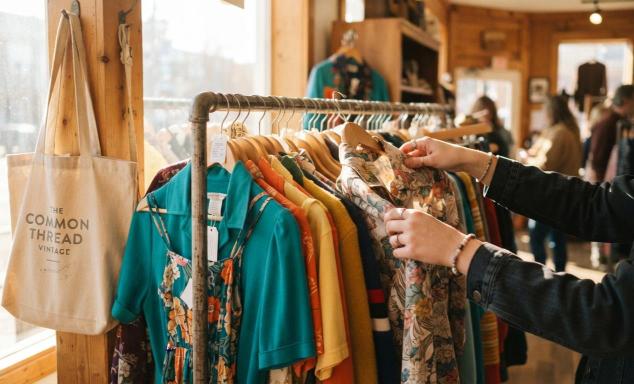
Some people walk into a thrift store and leave with a bag of regrets. Others walk out with a $6 wool blazer that looks like it cost $300 — and they do it every single time. The difference isn’t luck. It’s a system.
Thrifting is the ultimate style cheat code: better fabrics, unique pieces, tiny price tags, and a closet that’s kinder to the planet. But without a strategy, the endless racks can feel overwhelming, and “cheap” can quickly become “wasted money.”
That’s exactly why I put together these thrift store shopping hacks — the exact prep routine, rack-scanning method, and quality checklist I use to build a stylish wardrobe for pennies on the dollar. Grab your tote bag; let’s go treasure hunting.
Why Thrifting Is the Smartest Style Move Right Now
Before the tactics, here’s your motivation: secondhand clothing isn’t a compromise anymore — it’s an upgrade.
- Better quality: Older and vintage garments were often built with sturdier stitching and natural fibers that fast fashion abandoned.
- True uniqueness: You’ll never walk into a party wearing the same dress as three other people.
- Sustainability: Every secondhand piece is one less garment in a landfill — style with a clear conscience.
- Cost-per-wear magic: A $8 silk shirt worn 50 times costs 16 cents a wear. That’s unbeatable economics.
Before You Go: The 10-Minute Prep That Doubles Your Haul
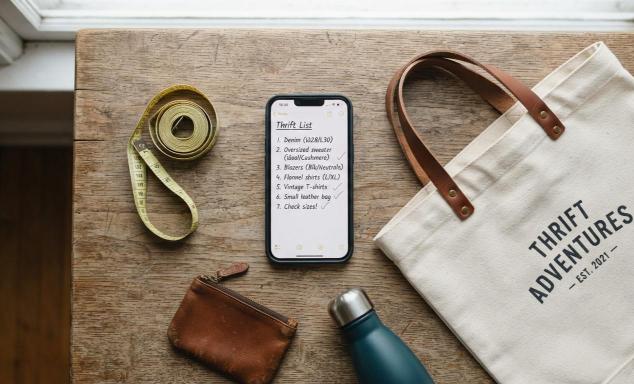
Amateur thrifters wander. Pros arrive prepared. Do these five things before you leave the house:
1. Save your measurements. Write your bust, waist, hips, and inseam in your phone notes. Sizes lie; centimeters don’t.
2. Shop your closet first. Check what’s missing from your capsule wardrobe essentials and hunt for those pieces — not whatever catches your eye.
3. Dress for the fitting room. Wear easy-to-remove layers and shoes that slip on and off. You’ll try on a lot of pieces.
4. Pack a mini toolkit. A soft measuring tape and your phone camera (for label photos) are game-changers.
5. Set a budget and a time limit. Two focused hours beats five distracted ones. Thrifting rewards fresh eyes.
How to Find the Best Thrift Stores Near You
Not all thrift stores are equal. Charity shops in higher-income neighborhoods typically receive higher-quality donations. Consignment stores curate for you (pricier, but faster wins), while vintage shops specialize in unique statement pieces.
Drive or walk through a few different areas, ask stylish locals where they shop, and don’t ignore online resale apps for specific searches. A good rule: keep two or three “treasure” stores in rotation and visit them regularly — familiarity is one of the best thrift store shopping hacks there is.
The Rack Strategy: How to Scan Like a Pro
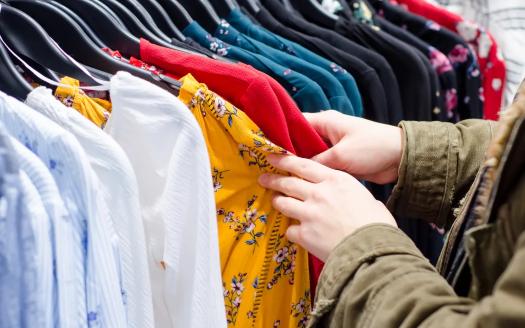
Here’s the scanning method that separates pros from browsers:
Touch first, look second. Slide your fingertips along the hangers and stop only for fabrics that feel substantial — silk, wool, linen, denim, leather. This filters out 80% of polyester clutter in seconds.
Flip to the label. Natural fibers are your green light. “100% cotton,” “wool,” and “silk” are words worth stopping for.
Shop the “wrong” sections. The men’s section hides oversized blazers and perfect vintage tees; the kids’ section hides cheap cropped sweaters; the plus section hides beautiful flowy dresses. Great thrifters are section-agnostic.
Check in good light. Before falling in love, hold the piece near a window or bright light and inspect the armpits, collar, cuffs, and hems for stains, moth holes, and worn seams.
Ignore the size tag. Vintage sizing runs tiny and modern sizing runs wild. If you love the look, it goes in the fitting-room pile — no exceptions.
Quality Checklist: What’s Worth Buying Secondhand
Always worth it:
- Wool coats & blazers — tailoring-heavy pieces that retail for hundreds but thrift beautifully. A great blazer anchors everything from office looks to a day to night outfit.
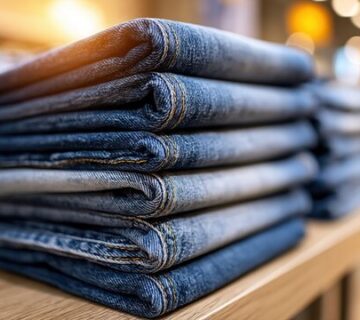
- Denim — broken-in vintage jeans often fit better than new ones. Our guide on how to find the perfect jeans applies here too: check rise and fabric, not the tag. (Internal link to Post #4 — add now!)
- Leather jackets & belts — leather ages like wine; scuffs add character.
- Silk shirts & scarves — luxurious fabric for a few dollars.
- Quality knits — check under the arms for moth holes and overall pilling (a sweater shaver fixes light pilling in minutes).
Usually skip:
- Fast-fashion polyester that already looks tired.
- Anything with a broken zipper or major structural damage (unless you sew).
- Heavily stained whites — some stains never surrender.
The repair rule: A missing button or a long hem = buy (cheap fixes). A replaced zipper or a taken-in waist = skip (unless the piece is extraordinary).
The Fitting Room Rules
Grab your whole pile — pros try on everything, because fabric behaves differently on a body than on a hanger.
Rule 1: Fit beats size. Buy the piece that fits your body now, not the one you’ll fit “someday.”
Rule 2: Think in tailoring. A $12 hem can turn an “almost” pair of trousers into your favorite pair. Budget $10–20 for alterations on hero pieces.
Rule 3: The three-outfit test. Before buying, name three specific outfits it creates with clothes you already own. If you can’t, it stays on the rack. This single rule eliminates 90% of regretted purchases.
Cleaning & Reviving Your Thrift Finds
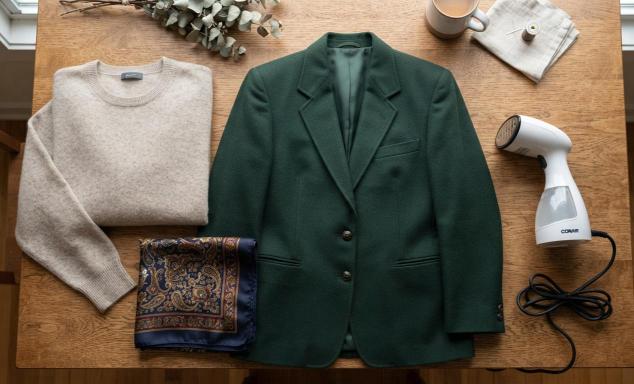
Everything gets refreshed before it enters your closet:
- Wash first: gentle cycle, cold water, inside-out. Add half a cup of white vinegar to the rinse to neutralize any “thrift store smell.”
- De-pill knits: a $15 sweater shaver makes old wool look brand new.
- Steam, don’t iron: steam relaxes wrinkles and freshens fibers safely.
- Condition leather: a quick wipe with leather conditioner revives jackets, bags, and belts.
- Upgrade buttons: swapping plastic buttons for metal or horn ones is a 10-minute trick that makes cheap pieces look bespoke.
Thrift Store Shopping Hacks for Scoring Designer Pieces
Ready for the advanced level? Here’s how the pros find the good stuff:
- Learn the signatures. Designer pieces have telltale details — clean interior finishing, quality linings, sturdy branded hardware. Study a few brands you love so you can spot them by touch.
- Ask about restock days. Every store has one. Shopping the morning after restock day means first pick of fresh donations.
- Befriend the staff. A friendly regular often gets a quiet heads-up when a great batch arrives.
- Buy off-season. Thrift winter coats in April and linen in October — selection is high and nobody’s competing with you.
- Go often, buy slowly. Frequent short visits beat rare marathons. Patience is the rarest and most profitable hack of all.
5 Thrifting Mistakes to Avoid
- Buying because it’s cheap. A $3 mistake still costs $3 — and closet space.
- Ignoring alteration math. Factor tailoring costs into the price before you commit.
- Skipping the fitting room. “It’ll probably fit” is how drawers of never-worn clothes are born.
- Shopping tired or rushed. Thrifting is a slow game; speed kills your eye.
- Overlooking the basics. Everyone hunts for statement pieces — but thrifted white tees, black trousers, and plain knits are the quiet goldmines.
Thrift Store FAQs
Is secondhand clothing hygienic? Yes — a proper wash (with vinegar for odors) makes thrifted clothes as clean as new ones. Leather and structured items can be steamed and aired instead.What’s the best day to thrift? It varies by store, but the day after restock or donation-processing days is prime time. Just ask the staff — it’s the friendliest of all thrift store shopping hacks.Can I build a whole capsule wardrobe from thrift stores? Absolutely. Denim, blazers, knits, and trousers thrift beautifully. Start with your essentials list and build piece by piece over a few visits.Final Thoughts
Great thrifters aren’t lucky — they’re prepared, patient, and picky in exactly the right order. Use the prep list, scan by fabric, run the three-outfit test, and refresh your finds at home. Do that for a month and your closet will look expensive while your receipts stay tiny.



[…] canvases. Paint over them with a solid, neutral color for cheap, large-scale art (read our thrift store shopping hacks for more […]
[…] ceramic for minimal, terracotta for warm — thrift stores are goldmines for unique pots, as our thrift store shopping hacks guide […]