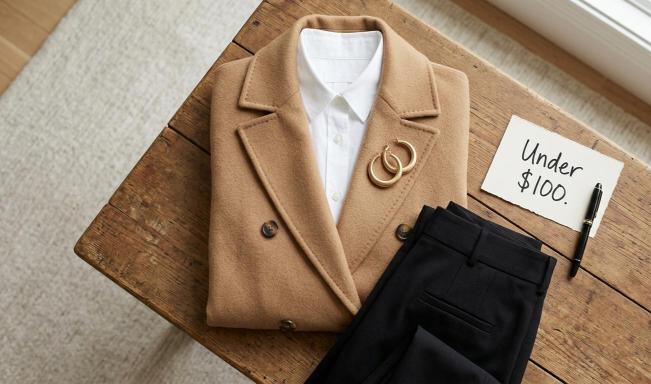
Here’s a secret the fashion industry quietly depends on you never learning: expensive-looking has almost nothing to do with expensive. Walk into any room and you’ll spot it — the person whose $12 thrifted blazer reads like $400, while someone else’s $500 outfit reads like a rushed airport nap.
The difference isn’t money. It’s strategy: fit, fabric, condition, and coordination. These are learnable skills, and honestly, they’re more fun than swiping a credit card.
In this guide, you’ll learn exactly how to look expensive on a budget — 12 secrets split into smart shopping, zero-cost styling tricks, and the tiny details that sell the whole look. Plus a 30-day challenge to put it all into practice.
The Truth: What Actually Makes an Outfit Look Expensive
Before the secrets, let’s define what “expensive-looking” really means, because it’s not what you think:
- Fit — clothes that skim your body cleanly, with hems ending exactly where they should.
- Fabric — natural fibers that drape and breathe instead of shiny, thin polyester.
- Condition — de-pilled, steamed, stain-free, with crisp edges.
- Cohesion — colors and metals that belong together.
- Restraint — one statement piece, not five competing ones.
Notice what’s missing? Price tags and logos. Luxury is a visual language, and once you learn its grammar, you can speak it fluently on any budget.
Part 1: Smart Shopping — Buy Like a Stylist
Secret #1: Shop your list, not your mood. Start from your capsule wardrobe essentials — when every purchase fills a real gap, nothing sits unworn. A list is the cheapest luxury item ever invented.
Secret #2: Read fabric labels like a pro. Natural fibers are your fast lane to “expensive”: cotton, wool, linen, silk, and blends of them. Be cautious with shiny polyester and thin jersey — the two fabrics that photograph cheap. The label check takes five seconds and saves fifty regrets.
Secret #3: Calculate cost-per-wear. A $120 coat worn 200 times costs 60¢ a wear. A $25 trend top worn twice costs $12.50 a wear. Budget style isn’t buying the cheapest thing — it’s buying the best-value-per-wear thing.
Secret #4: Make secondhand your first stop. Thrift stores and resale apps carry the natural fibers, tailoring, and leather that retail prices make painful. Our thrift store shopping hacks turn thrift trips into treasure hunts — designer-quality fabric for coffee money.
Secret #5: Shop off-season. Winter coats in April, linen in October. End-of-season racks are where quality lives at 60–80% off.
Secret #6: The 24-hour + three-outfit rule. Never buy on the spot. Wait a day, and before checkout, name three specific outfits it creates with what you already own. Can’t? It stays on the rack.
Part 2: The Styling Secrets That Cost $0
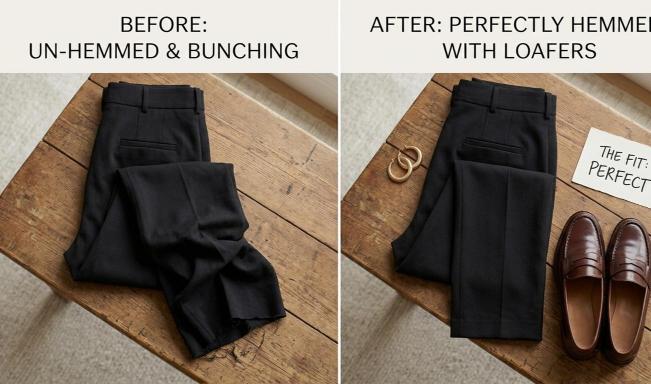
Secret #7: Tailoring is the ultimate luxury cheat code. This is the single most powerful trick in this entire article. A $12 hem or a $15 waist adjustment makes $30 trousers look like $200 trousers. Every great stylist has a tailor; now you do too. Prioritize hems, waistbands, and sleeve lengths.
Secret #8: Monochrome and tonal dressing. One color head to toe — all cream, all black, all camel — is the most reliable “rich person uniform” in fashion. It reads intentional, elongates your frame, and hides cheap fabrics beautifully.
Secret #9: Fit over size. Buy the size that fits now, not the size label you wish you wore. Well-fitted “wrong” sizes beat badly-fitted “right” sizes every single time. (This is the same philosophy behind our guide on how to find the perfect jeans.)
Secret #10: Steam and press everything. Wrinkles are the universal tell of neglected clothes. A $25 steamer (or even a hot shower hang) makes every piece look freshly bought. Crisp collars and sharp hems do quiet, powerful work.
Part 3: The Quiet Details That Sell the Look
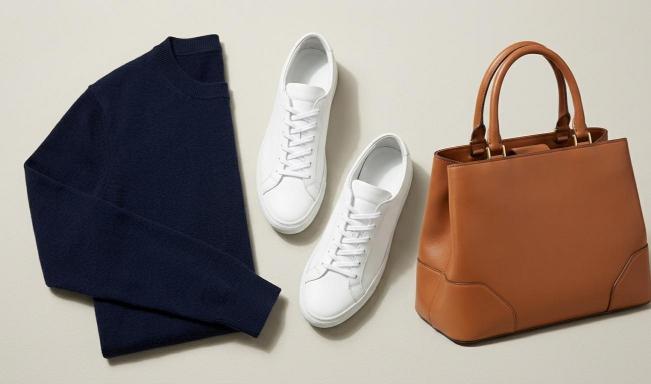
These micro-details are invisible individually and unmistakable together:
- Shoe condition — clean soles, polished leather, fresh white laces. Shoes are the first thing sharp eyes check.
- Structured bags over slouchy ones — a $30 bag that holds its shape reads more expensive than a sagging $400 one. Structure is the luxury signal.
- Swap the buttons — replacing plastic buttons with metal, horn, or pearl ones costs pennies and makes basics look bespoke.
- Remove everything that screams “new and cheap” — paper tags, giant brand stickers, dangly security labels.
- No-logos philosophy — quiet confidence beats walking billboard. If the logo is the point of the piece, skip it.
These details also make budget pieces work harder in formulas like a day to night outfit, where polish matters double.
Where to Spend vs. Where to Save
|
💰 Spend Here
|
🪙 Save Here
|
|---|---|
|
Coats & blazers (tailoring-heavy heroes)
|
T-shirts & basic knits
|
|
Shoes (comfort + condition show)
|
Trend pieces
|
|
Bags with structure
|
Costume jewelry
|
|
Tailoring & alterations
|
Loungewear
|
|
One great pair of jeans
|
Statement seasonal items
|
The logic: spend on items that are seen closely, used daily, or structurally complex. Save on items that are washable, trendy, or hidden under layers.
The 30-Day Budget Style Challenge
Want proof this works? Try it:
Week 1 — The Audit. Photograph every outfit you wear. List your gaps against your capsule essentials. No spending allowed.
Week 2 — The Hunt. Thrift or shop resale for 2–3 gap pieces using the six shopping secrets. Budget: whatever you saved by not impulse-buying.
Week 3 — The Tailor. Take your two best budget pieces to be adjusted. Experience the transformation firsthand.
Week 4 — The Styling. Build five monochrome outfits, steam everything, refresh your shoes, and photograph the results. Compare them to Week 1.
Most people are stunned by the difference — same closet, new language.
How to Look Expensive on a Budget: FAQs
Do expensive clothes always last longer? Not automatically — construction and fiber matter more than price. A well-made mid-range piece beats a poorly made designer piece every time. Read labels, not logos.
What’s the single biggest upgrade under $20? Tailoring one item (hemming trousers or taking in a waist). Nothing else moves the needle so far for so little.
Can fast fashion look expensive? It can pass — if the fabric is matte, the fit is tailored, and the details are groomed. Just know it won’t age as gracefully, so spend your fast-fashion money on trends, not staples.
Final Thoughts
Learning how to look expensive on a budget is really learning to see like a stylist: fit first, fabric always, details obsessively, and restraint as the final luxury. Your bank account never needs to know.



No comment