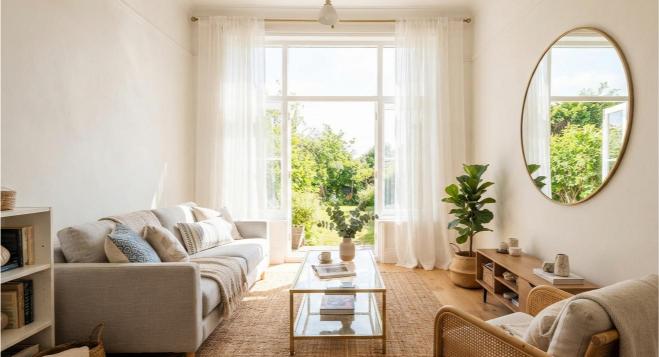
We’ve all been there: you love your home, but some days it feels less “cozy chic” and more “glorified closet.” When you can’t knock down walls or add square footage, it’s easy to feel trapped by your floor plan.
But here is the interior design industry’s best-kept secret: the size of your room matters far less than the visual weight inside it. A 400-square-foot apartment can feel like a luxurious boutique hotel, while a 1,000-square-foot house can feel cluttered and suffocating. The difference isn’t money; it’s optical illusion.
In this guide, we’re breaking down the 5 most effective small space decorating hacks used by professional designers. These aren’t just about buying smaller furniture; they are about manipulating light, scale, and the eye to trick the brain into seeing more space than is actually there. Let’s expand your home, visually.
Why Small Spaces Feel Cramped (The Visual Weight Rule)
Before we fix the room, we need to understand the problem. A room feels small when it has too much “visual weight.”
Visual weight is how heavy an object looks to the eye. A chunky, dark, skirted sofa sitting flat on the floor has massive visual weight. It anchors the eye and stops it from moving. A light-colored sofa with exposed legs and a low profile has low visual weight; the eye glides right past it.
When a room is packed with high-visual-weight items, the brain registers the space as crowded and claustrophobic. The goal of these small space decorating hacks isn’t necessarily to own fewer things, but to choose things that allow light and the human eye to travel freely.
Hack 1: The “High and Wide” Window Trick
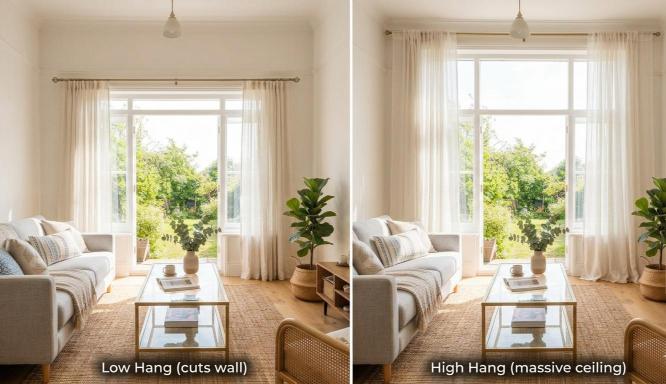
This is the single cheapest, highest-impact trick in a designer’s playbook. Most people hang their curtain rods right above the window frame and buy curtains that end at the windowsill. This visually chops your wall in half and makes your ceilings look low.
The Hack:
- Hang them high: Install the curtain rod just 2 to 3 inches below the ceiling line (or crown molding).
- Hang them wide: Extend the rod 8 to 12 inches past the window frame on both sides.
- Let them kiss the floor: Buy panels long enough to gently graze the floor.
Why it works: When curtains hang from ceiling to floor, the eye travels the entire vertical length of the wall, tricking the brain into thinking the ceilings are much higher than they are. Extending the rod wide means that when the curtains are open, they frame the window glass rather than blocking the natural light.
Pro Tip: Stick to sheer or lightweight linen fabrics. Heavy velvet drapes in a small room add too much visual weight and block the light that makes the room feel expansive.
Hack 2: The Mirror Multiplication Effect
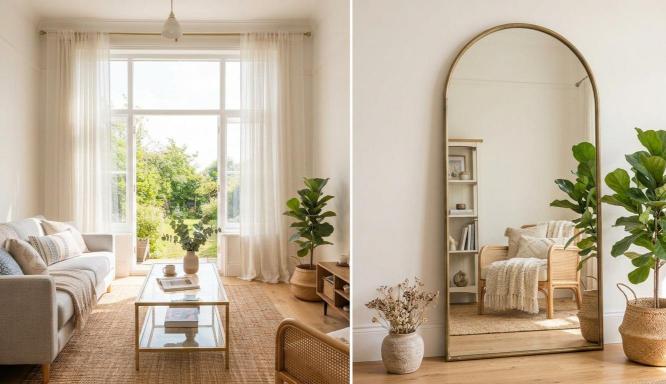
Mirrors are the closest thing to actual magic in interior design. They don’t just reflect the room; they reflect the light and the depth.
The Hack: Place a large mirror directly opposite your largest window.
Why it works: The mirror acts as a second window, bouncing natural light into the dark corners of the room and creating a vanishing point that makes the room feel twice as deep.
Mirror Placement Rules for Small Rooms:
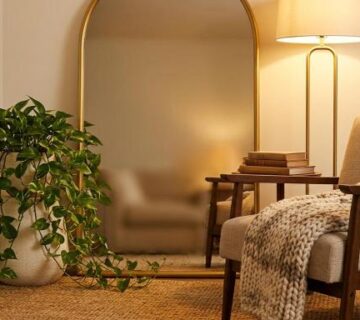
- The Lean: A massive oversized floor mirror leaning against a wall feels effortlessly chic and takes up zero wall-drilling effort.
- The Gallery: If you only have small mirrors, group them in a tight grid on a narrow wall to create the illusion of a larger, single architectural feature.
- The Bounce: Place a mirror behind a table lamp or a candle to double the ambient lighting in the evening (a great companion to our guide on cozy home lighting ideas).
Hack 3: “Leggy” Furniture & Floating Shelves
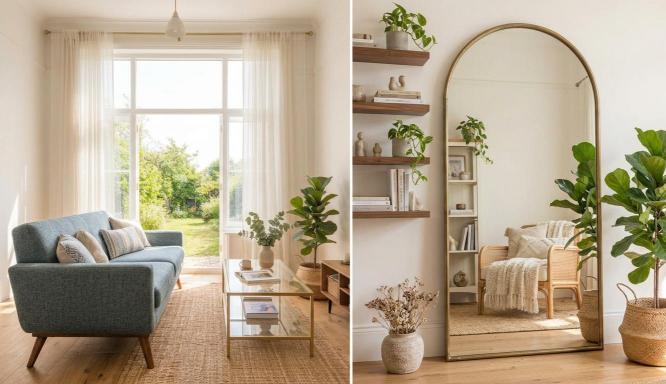
Think about how you judge the size of a parking lot. You look at the empty pavement. The same logic applies to your floor. If your furniture sits flush against the ground (like a skirted sofa or a heavy storage bed), the eye stops at the baseboard, and the room feels boxed in.
The Hack: Buy furniture with exposed legs, and use floating shelves instead of bulky bookcases.
Why it works: When you can see the floor continuing underneath your sofa, bed, or desk, your brain calculates the total square footage of the floor, making the room feel larger.
- Sofas & Chairs: Look for mid-century modern styles with tapered, exposed legs.
- Coffee Tables: Acrylic (ghost) tables or glass tables have virtually zero visual weight. A wooden table with thin, hairpin legs also works beautifully (and keeps the surface clear for our favorite coffee table styling tips.
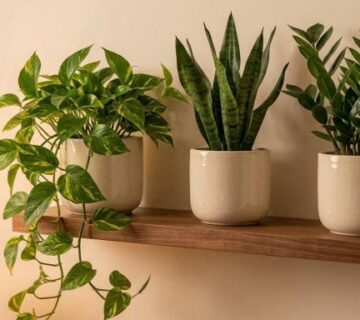
- Storage: Swap heavy, floor-to-ceiling bookshelves for floating shelves. They draw the eye upward, utilizing vertical space without eating up floor space.
Hack 4: The Monochromatic Color Illusion
Just like wearing a single color from head-to-toe makes you look taller in fashion, painting a small room in a monochromatic palette makes the walls recede.
The Hack: Paint your walls, baseboards, and even the ceiling the exact same color (or very close shades of the same color).
Why it works: When the walls and the trim are contrasting colors (like white trim against grey walls), the eye stops at every corner and border, highlighting the exact dimensions of the box you are standing in. When the colors blend, the boundaries of the room blur. The eye can’t tell where the wall ends and the ceiling begins, creating a feeling of infinite space.
Color choices for small spaces:
- Warm Whites & Creams: Bounce light beautifully and feel expansive.
- Soft Sage or Pale Blue: Cool tones visually recede, making walls feel further away than they are.
- The Moody Cave (The Exception): Sometimes, embracing the smallness and painting the room, ceiling, and trim a dark, moody charcoal or navy creates a “jewel box” effect. It doesn’t look bigger, but it looks incredibly intentional, luxurious, and cozy.
Hack 5: Zoning & The “Negative Space” Rule
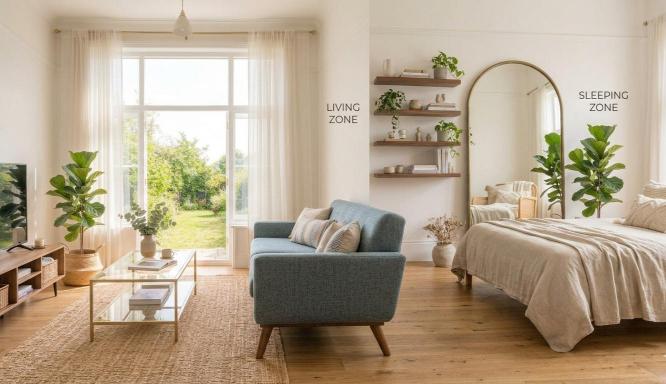
The biggest mistake people make in small rooms is pushing all the furniture flat against the walls, “bowling alley” style, to leave an empty space in the middle. Ironically, this makes the room feel smaller and more awkward.
The Hack: Float your furniture and leave “negative space.”
Why it works: Negative space (the empty areas around and between objects) is what gives the eye a place to rest. If every inch of a room is filled, the room feels chaotic.
- Float the sofa: Pull the sofa 3 to 6 inches off the wall. It creates a shadow line that makes the room feel deeper.
- Create zones: Use a floating sofa or a low bookshelf to divide a studio into a “living zone” and a “sleeping zone.”
- Clear the pathways: Ensure there is a clear, unobstructed walking path from the door to the main areas of the room. If you have to turn sideways to get to the kitchen, the layout is failing you.
5 Small Space Mistakes to Avoid
- Relying on the “Big Light”: A single, harsh overhead ceiling light flattens the room and casts ugly shadows, making it feel like a sterile dorm room. Always use layered lamps to create depth (ditch the big light, as we recommend in our cozy home lighting ideas.
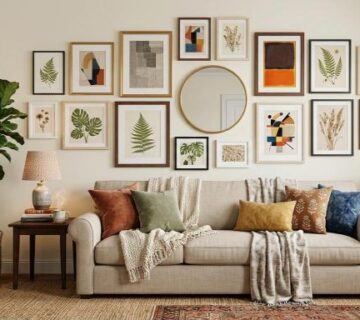
- Too Many Small Accessories: A gallery wall of 40 tiny frames looks cluttered. One oversized piece of art makes the room feel grand. Scale matters.
- Ignoring the Ceiling: The ceiling is the fifth wall. Painting it a high-gloss white or adding a subtle wallpaper draws the eye up.
- Buying “Apartment-Sized” Furniture: Don’t just buy tiny, dollhouse-scale furniture. A room with one large, comfortable sofa actually looks bigger than a room crammed with three tiny, uncomfortable loveseats.
- Cluttered Surfaces: Keep your aesthetic desk setup and kitchen counters ruthlessly clear. Visible clutter shrinks a room instantly.
Small Space Decorating on a Budget
You don’t need to buy a brand-new West Elm sofa to make these hacks work.
- Thrift large art: Visit local thrift stores and buy massive, oversized canvases. Paint over them with a solid, neutral color for cheap, large-scale art (read our thrift store shopping hacks for more tips).
- Swap the hardware: Change the legs on your current bulky sofa or bed frame to exposed wooden or metal ones (you can buy universal screw-in legs online).
- Use tension rods: If you can’t drill holes for floating shelves or high curtain rods, use high-tension wire systems or tension rods.
Small Space Decorating Hacks FAQs
What colors make a small room look bigger? Light, cool colors like crisp white, pale grey, and soft blues reflect light and make walls feel like they are receding. However, a monochromatic dark color can also blur the boundaries of a room for a cozy, luxurious effect.
How do I decorate a small room with a lot of stuff? Use hidden storage (beds with drawers underneath, ottomans with hidden compartments) and vertical storage (tall, narrow bookcases). The key is to hide the clutter behind closed doors so the visual weight stays low.
Does a large rug make a small room look bigger? Yes! A common mistake is using a tiny “postage stamp” rug under a coffee table. A large rug that fits all the front legs of your furniture expands the visual footprint of the seating area.
Final Thoughts
Living in a small space doesn’t mean sacrificing style or comfort. By mastering these small space decorating hacks—hanging curtains high, using mirrors, choosing leggy furniture, blurring color lines, and respecting negative space—you can trick the eye and create a home that feels expansive, intentional, and entirely yours.

No comment