You know the scene: the dressing room floor covered in denim, three different sizes of the same pair, and a mirror that seems determined to ruin your day. Buying jeans is famously frustrating — but here’s the good news: it’s not your body that’s the problem, it’s the jeans.
Denim sizing is wildly inconsistent between brands, stretch percentages change everything, and most people are simply guessing their way through rises and fits. Once you understand the language of denim, the guessing ends.
In this guide, you’ll decode rises, fits, washes, and fabric content — and learn exactly how to find the perfect jeans for your body, your lifestyle, and your budget. Consider this your denim dictionary and dressing-room survival kit, all in one.
Why Finding the Perfect Jeans Feels So Hard
Before the solutions, a quick reality check so you can stop blaming yourself:
- There is no universal sizing. A size 28 in one brand can measure two inches different in another. Vanity sizing makes labels meaningless.
- Fabric changes everything. Two identical-looking pairs — one 100% cotton, one with 2% elastane — will fit and feel completely different.
- Rise is the hidden make-or-break. The wrong rise creates gaping, digging, and pulling, even when the “size” is right.
Understanding these three variables is 90% of knowing how to find the perfect jeans. The other 10% is the dressing-room checklist below.
Denim Dictionary: Know Your Rises, Fits & Washes
The Rises
- Low rise sits below the hip bone — trendy and relaxed, best with longer tops.
- Mid rise sits at or just below the belly button — the comfortable middle ground.
- High rise sits at or above the belly button — the most universally flattering, as it defines the waist and prevents gaping.
The Fits
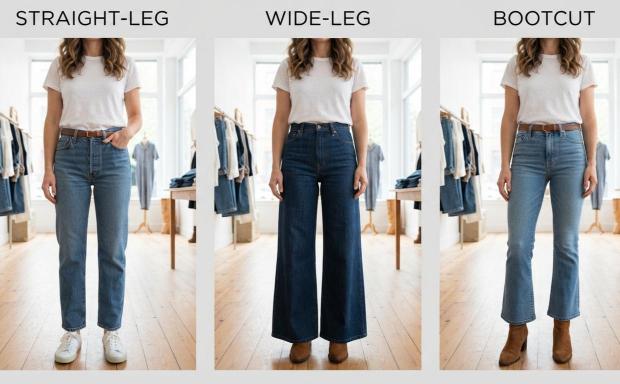
- Straight: consistent width from hip to hem. The timeless workhorse.
- Wide-leg: roomy from the thigh down. Dramatic, modern, and comfortable.
- Bootcut/flare: fitted through the thigh with a gentle kick below the knee. Leg-lengthening magic.
- Relaxed/baggy: loose through the seat and leg. Streetwear staple — balance it with fitted tops.
- Skinny: fitted throughout. Less dominant now, but still a great tuck-into-boots option.
The Washes
- Dark indigo: the dressiest denim — works with blazers and heels.
- Mid wash: the everyday classic.
- Light wash: casual, summery, weekend energy.
- Black: sleek, night-ready, goes with everything.
- White: crisp spring/summer statement.
How to Find the Perfect Jeans for Your Body Type

Quick note: these are starting points, not laws. Personal comfort always wins.
Hourglass: Highlight your defined waist with high-rise straight or wide-leg jeans. Avoid low rises that fight your curves and create gaping at the back.
Pear: High-rise styles with 1–2% stretch smooth over hips and thighs. Dark washes and straight or bootcut legs balance your proportions beautifully.
Apple: Mid-rise jeans with gentle stretch sit comfortably at your natural waistline without digging. Straight legs create a clean, elongated line.
Rectangle: Create the illusion of curves with high-rise wide-leg or bootcut jeans — the added volume below the waist suggests shape. Belts and half-tucks help too.
Petite: High-rise cropped or straight legs with a clean hem lengthen your line. If you love wide-leg, get them hemmed — proportion is everything (more on tailoring below).
Tall: You can carry dramatic wide-leg and full-length flares like nobody else. Look for brands offering “long” inseams so hems actually reach your shoes.
The Stretch Test: Reading Fabric Like a Pro
Flip the jeans to the care label and check the fabric content — it predicts the fit better than the size tag does.
- 100% cotton (rigid): molds to your body over time. Buy these snug (not painful) — they relax about half a size with wear.
- 98% cotton / 2% elastane: the sweet spot. Comfortable now, holds its shape all day.
- 90%+ stretch blends (jeggings territory): ultra-comfy but can bag out at the knees by evening. Great for lounging, less great for polished looks.
Two in-store tests: Do the pull test — grab the waistband and pull; about an inch of give means a good snug buy. And the sit test — actually sit on the dressing room bench. Jeans that feel fine standing can become torture sitting, and you spend half your life seated.
In the Dressing Room: 5 Checks Before You Buy
- The gap check: Stand sideways to the mirror. If light shows between your lower back and the waistband, size down or try a “curvy” cut — don’t fix it with a belt forever.
- The pinch test: At the hip, you should be able to pinch about an inch of fabric. More means bagging later; less means over-stretching.
- The squat test: Squat fully and cross your legs. If you’re adjusting, tugging, or wincing, the fit is wrong.
- The pocket check: Back pockets placed slightly higher and closer together lift and slim the seat. Pockets that sit low or wide do the opposite.
- The shoe plan: Decide now which shoes these jeans are for, and judge the length accordingly. A hem that’s perfect with sneakers may drag with flats. (And remember — chunky sneakers pair best with hems that graze the shoe, as we covered in our guide on how to style chunky sneakers.
Pro tip: Always try the same size in two different cuts, and the same cut in two sizes. Ten extra minutes saves years of regret.
Wash Guide: Which Denim Color for Which Occasion
Think of washes as formality levels. Dark indigo and black are your “dressed-up” denim — pair them with blazers, heels, and nice knits; dark denim can even anchor a polished day to night outfit. Mid wash is your Monday-to-Sunday default. Light and white washes are weekend, vacation, and summer pieces that shine with tees and sneakers.
If you’re building a lean closet, your first three pairs should be: a dark straight-leg, a mid-wash everyday pair, and a black pair. That trio covers roughly 95% of real-life occasions — a core principle we also apply in our capsule wardrobe essentials guide.
Caring for Your Jeans So They Last Years
The perfect pair deserves better than a weekly spin cycle. Wash jeans rarely — every 8–10 wears is plenty — and always inside-out, in cold water, on a gentle cycle. Hang dry; the dryer is what kills elastane and shrinks cotton. Spot-clean small marks, air them out between wears, and wash dark denim alone for its first two washes to protect the rest of your laundry.
Perfect Jeans FAQs
Should new jeans feel tight at first? Snug, yes — painful, no. Rigid denim relaxes about half a size; stretch denim should feel perfect on day one.
How many pairs of jeans do I actually need? Three to four: a dark straight-leg, a mid-wash casual pair, a black pair, and optionally a light or white seasonal pair.
Is it worth buying expensive denim? Cost-per-wear says sometimes yes. A $120 pair worn 300 times beats a $40 pair worn 20 times. But thrift shops and sales are goldmines — our thrift store shopping hacks post will show you how to hunt.
Final Thoughts
Learning how to find the perfect jeans isn’t about chasing one magic brand — it’s about knowing your rise, reading the fabric, respecting the fit, and trusting the dressing-room checklist. Do that, and denim shopping goes from dreaded chore to quiet confidence.




[…] “right” sizes every single time. (This is the same philosophy behind our guide on how to find the perfect jeans.) Secret #10: Steam and press everything. Wrinkles are the universal tell of neglected […]